Accepting Medicare

PiezoWave2 Therapy for Chronic Pain: Can It Help Heel, Tendon, Shoulder, and Knee Pain?
Persistent heel, tendon, shoulder, or knee pain can interfere with exercise, work, and routine activities. When comparing PiezoWave2 vs. radial shockwave, an important distinction is how each technology generates and distributes mechanical energy within tissue. At Tatum Chiropractic and Wellness, Dr. Tim Lind evaluates musculoskeletal symptoms and clinical findings before considering treatment options. Results vary, and shockwave therapy is not suitable for every cause of chronic pain.
Quick Summary
- PiezoWave2 uses piezoelectric technology to generate acoustic pressure waves.
- Shockwave therapy has been studied for several musculoskeletal conditions, with evidence varying by diagnosis.
- Research suggests potential benefits for chronic plantar fasciitis and some tendinopathies.
- Heel, tendon, shoulder, and knee pain can have different causes, making an evaluation important before treatment.
- Focused and radial shockwave therapies work differently, but neither is always better.
- Treatment response and the number of sessions needed vary among patients.
How Does PiezoWave2 Therapy Work?
PiezoWave2 uses piezoelectric technology to generate acoustic pressure waves that can be directed toward a defined treatment area. Radial pressure waves spread more broadly from the applicator, while focused shockwaves concentrate energy within a more defined treatment zone.
Research has examined how shockwave therapy may affect pain and tissue-related biological responses, although the clinical significance varies by condition. It should not be presented as regenerating damaged tissue, eliminating inflammation, or curing chronic pain.
Can It Help Heel and Plantar Fascia Pain?
Plantar fasciitis is one condition associated with persistent heel pain. Research suggests extracorporeal shockwave therapy may lessen pain and improve function in some individuals with chronic plantar fasciitis, although outcomes vary across studies and treatment protocols.
For someone researching plantar fasciitis treatment in Cave Creek, an evaluation can help clarify whether symptoms are consistent with plantar fascia pain or another source of heel discomfort. Pain location, symptom duration, recent activity, and examination findings can guide the next steps.
Options for heel pain treatment in Cave Creek depend on the underlying problem. Shockwave therapy may have a role in certain musculoskeletal conditions, but it should not be viewed as a guaranteed solution.
What About Achilles Tendon and Elbow Pain?
Tendon pain can develop or worsen with repetitive loading, sudden changes in activity, and other mechanical demands. Shockwave therapy has been studied for Achilles tendinopathy, but evidence regarding its effectiveness remains mixed.
For persistent Achilles symptoms, Achilles tendonitis treatment may include activity modification and progressive loading or exercise, depending on clinical findings. Treatment decisions should consider the individual presentation and other conservative options.
For tennis elbow treatment, evidence for shockwave therapy is also inconsistent. Repetitive gripping and wrist use can contribute to pain around the outer elbow, but care should reflect the diagnosis and functional limitations rather than symptom location alone.
Can Shockwave Therapy Be Used for Shoulder or Knee Pain?
Shoulder discomfort can involve tendons, muscles, bursae, joints, or other structures. The phrase shoulder pain when lifting arm can describe several problems and does not establish a diagnosis by itself. An examination can help clarify the likely cause and whether shockwave therapy has a reasonable role in care.
Shockwave therapy has also been studied for patellar tendinopathy, but many other conditions can cause knee pain. Arthritis, acute trauma, meniscus disorders, and other problems may call for different evaluation and treatment approaches. Persistent or worsening symptoms should be professionally assessed rather than self-diagnosed.
Focused vs. Radial Shockwave: Is One Better?
Radial pressure waves spread outward from the applicator into a broader area, while focused shockwaves concentrate energy within a more defined treatment zone.
Neither approach is universally superior. Comparative research has not established a clear overall advantage for one method across tendinopathies. The choice should account for the condition being addressed, clinical findings, tissue characteristics, and individual circumstances.
What Can You Expect From Care in Cave Creek?
Before pursuing PiezoWave2 therapy in Cave Creek, a clinical assessment can help establish whether this type of treatment fits the condition being addressed. Dr. Tim Lind has more than 35 years of experience and over 300 hours of advanced postgraduate training.
Depending on the clinical findings, his care may incorporate modern chiropractic technology, including ArthroStim®, flexion-distraction, drop-table techniques, and muscle-stimulation tools. The approach varies according to the patient’s needs rather than following the same treatment combination for everyone.
The practice accepts Medicare. Coverage for individual services depends on applicable Medicare benefits and requirements, so Medicare acceptance should not be interpreted as confirmation that a particular therapy is covered.
Find Out Which Approach Fits Your Symptoms
Pain location alone cannot determine which treatment is suitable. Heel discomfort, tendon problems, shoulder symptoms, and knee pain can arise for different reasons, making an individual evaluation important before choosing care.
If persistent musculoskeletal pain is limiting your activities, consider scheduling an evaluation with Dr. Tim Lind in Cave Creek. The visit can help clarify the likely cause of your symptoms and which conservative options may fit your clinical needs.
Frequently Asked Questions
No. PiezoWave2 uses piezoelectric technology to generate acoustic pressure waves, while radial devices generate and distribute pressure differently. The appropriate method depends on the condition and clinical findings.
Research suggests it may improve pain or function for some people with chronic plantar fasciitis. Results vary, and heel pain should first be evaluated because it can have other causes.
Evidence for Achilles tendinopathy is mixed. Some patients may improve, but outcomes are not guaranteed, and other conservative measures may also form part of care.
It has been studied for patellar tendinopathy, but knee pain can have many causes. An evaluation can help determine whether this type of therapy has a reasonable role.
It has been studied for certain shoulder conditions, including calcific rotator cuff tendinopathy. Because shoulder pain has multiple causes, treatment should follow an appropriate evaluation.
There is no universal number. Treatment frequency can vary according to the condition, protocol, clinical response, and individual circumstances.
Patients in Cave Creek can discuss persistent musculoskeletal symptoms with Dr. Tim Lind to learn whether shockwave therapy may be suitable after an individual evaluation.
No. Pain relief is not guaranteed. Outcomes vary according to the condition being treated and individual response.
Reviewed by
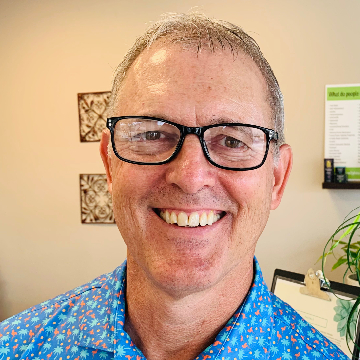
Dr. Tim Lind, DC
Dr. Tim Lind, DC is a licensed chiropractor and founder of Tatum Wellness and Chiropractic in Cave Creek, Arizona, serving patients across the Phoenix metro area. A 1990 graduate of Los Angeles Chiropractic College, he has over 35 years of experience helping patients recover from spinal conditions, disc injuries, joint dysfunction, headaches, and other musculoskeletal concerns.
Specialties & Training:
- Over 300 hours of post-graduate education in functional neurology, functional medicine, endocrinology, and non-surgical rehabilitation of disc injuries
- Trained in Gonstead, Diversified, Thompson Drop, Flexion-Distraction, instrument-assisted adjusting, and Trigenics®️
Patient Approach:
Dr. Lind believes no two patients are the same. He carefully evaluates the nervous system, movement patterns, and overall health to create personalized care plans for both acute and chronic conditions.
Outside the Clinic:
An avid golfer, fly fisherman, and hiker, Dr. Lind enjoys spending time with his wife Shelley and family in Arizona.